
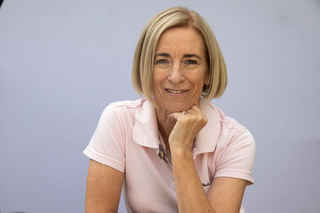
In our last interview, Sarah and I discussed her writing genre change from her first book, psychological thriller, A Voice in the Night, to her second book, historical fiction, The Dilemma. And she’s done it again! Her third novel, Love. Camera. Action is a romantic comedy.
Today, we discuss her ability to shift genres, and the details of her latest release.
Can you please share the blurb for Love. Camera. Action?
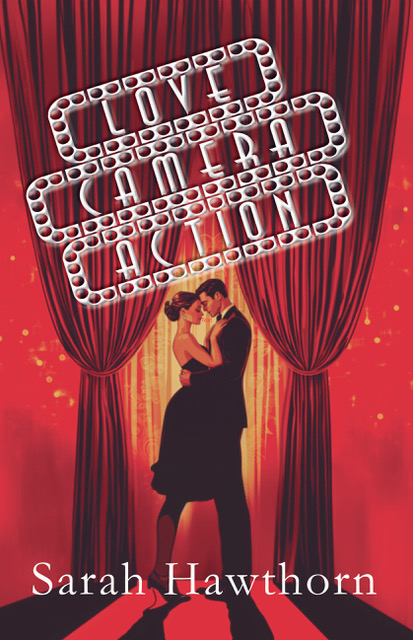
In the quaint Australian country town of Warbol, faded B-grade actress, Faith Farmer, dares to dream again. With a heart full of passion and a pocketful of savings, she revives the local cinema, The Rex, and invites the community to fall in love with the Golden Age of Hollywood.
As the silver screen flickers to life, the townspeople find themselves swept up in a world of romance, drama, and laughter. Jock, a handsome country vet, finds the courage to leave his unhappy marriage and pursue his heart’s desire. Charlotte, a former nun, discovers a new sense of purpose and love. And Faith, well, she finds a second chance at stardom—and love—in the unlikeliest of ways.
Join Faith and the lovable residents of Warbol as they laugh, cry, and fall in love. With its colorful cast of characters, charming small-town setting, and a healthy dose of old-school Hollywood glamor, this delightful romantic comedy will capture your heart and leave you smiling long after the credits roll.
Psychological thriller, historical fiction, now rom-com. How do you decide which genre to write in?
I don’t! Initially, I spend quite a while playing around with all sorts of ideas for a new novel. The process usually involves drafting a few thousand words to see if the premise has ‘legs’ and whether I love the writing challenge it presents. What category the book will slot into is secondary. As a result, it might look as if I’m a bit of a genre-hopper, but there are common themes – namely that I lean towards more complex interlocking plots.
How hard is it to keep reinventing yourself?
I don’t really see it that way, because ultimately, once I’ve nailed a premise, I follow a set routine: come up with a chapter outline, ‘hear’ the voices in my head, and then write the story – word by word, page by page. However, if I’m not super-familiar with the genre, it can mean reading other works of fiction in the same space to check for any conventions. In some respects, it’s not changing genres that creates work, but the original research required by invoking new settings and locations, or writing about an unfamiliar era.
However, changing direction can make it more difficult to find a publisher. Small presses who specialize in a particular genre may not be keen to take another work that doesn’t fit into their chosen category. Emerging authors are often advised that to build their ‘brand’, they need to be predictable for readers, who want ‘more of the same’, and must keep churning out complementary books.
It’s true that changing genres risks alienating some loyal readers, and creates a necessity for working extra-hard to develop new audiences, but there are plenty of examples of writers who flip genres – and don’t use pseudonyms – and are exceedingly successful.
The other advice given relentlessly to writers is to write what you want to write, not chase the market! I might be affecting sales potential, but I’m not grinding away at similar stories that don’t give me creative joy.
If you chose one genre and stuck to it, which would it be?
Historical mystery with romantic elements … I think that’s probably three genres rolled into one! I love the challenge of delving into a particular time period – anything early-mid twentieth century is my preference. I especially like laying false trails to set the reader off on the wrong track, whilst ensuring all the red herrings are logical. However, I’m not drawn to the minutiae of police procedure, and so a little bit of romance, coupled with amateur sleuthing, avoids involving too many coppers playing it ‘by the book’.
I love the way you’ve used movies as a device in Love. Camera. Action. Can you explain how you did this?
Back in 2015, I wanted to start a new book but had zero ideas and was beginning to feel a bit panicky. After all, what’s a writer without a plot? In desperation, I watched some favourite old black and white movies to see how the great screenwriters told an amazingly gripping story in about one and a half hours. After hours of couch-surfing in the name of research, I was no nearer finding my next novel. But then I had the idea of mixing up several of the plots to create a new story. I drafted a narrative which reflected elements of Brief Encounter and as I wrote, the idea of mirroring a classic movie in each chapter came to fruition.
Do you think your background as an actor influenced your choice of Faith as a main character? How did it influence the book more broadly?
Absolutely. In fact Faith’s character is based on a marvelous actress of a similar generation who I worked with in an old time music hall dinner theatre when I first arrived in Sydney. She dressed flamboyantly and had one of those deep theatrical voices. She totally lived for the theatre and acting, and I recall visiting her home where the walls were covered in framed photographs of every performance from her lengthy career.
And yes, my own first-hand experience helped enormously. In theatre, not only do you get the opportunity to play multiple characters, but you meet a vast array of actors, from the intense to the eccentric.
Who would you have play Faith in a movie adaptation of Love. Camera. Action.?
I reckon Brenda Blethyn or Jackie Weaver would be stellar.
Love. Camera. Action has a large ensemble cast, which is always a challenge for writers. How did you make each character distinctive so readers can keep everyone straight in their head?
Each of the characters was so clear to me from the get-go that it wasn’t hard bringing them to the page, but I was very conscious of differentiating everyone so each had a memorable name, and one or two quirky characteristics. Along the way, I considered dropping one or two of the storylines for a less complex read, but the result would have been a completely different, more linear book. I figured readers are intelligent, and that I could always delve deeper into any favourite characters by writing them into a stand-alone story or sequel.
What next?
A different genre of course! High Land, a thriller about a girl who survives a tandem skydive that causes her instructor’s death, is being published in October 2026 by Transit Lounge (Melbourne).
You can follow Sarah on:
Website: www.sarahhawthorn.com.au
Facebook: sarah.hawthorn.5
Insta: sarah_hawthornauthor
Booksales link: Amazon Love. Camera. Action.
Next time: an interview with K.D. Aldyn on writing gritty thrillers.
 Brightside Story Studio
4 thoughts on “Sarah Hawthorn on Love. Camera. Action.”