
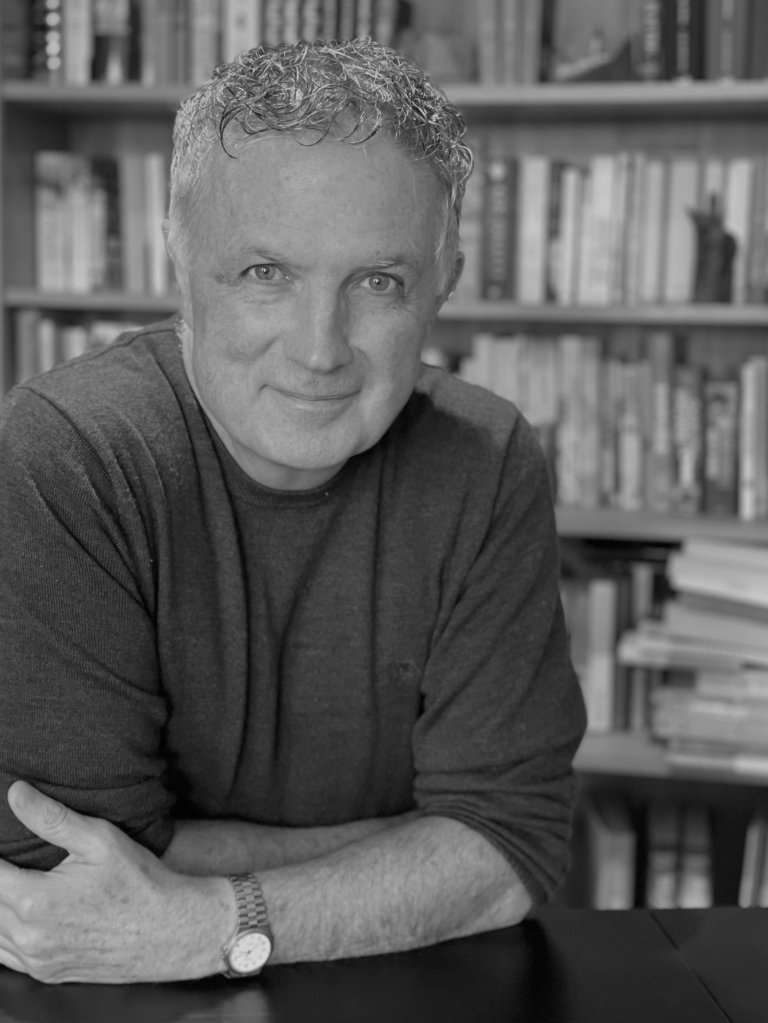
Pat is a successful business owner who specializes in strategic leadership and change. He works with a variety of organisations, assisting their senior leaders to develop innovative strategies for achieving success.
He has trained with British paratroopers, and travelled broadly, spending time in Russia, Scandinavia, Southeast Asia, the Nevada desert, and North Africa. His exposure to the military and intelligence sectors brings a disturbing reality to his debut novel The Minerva Agenda.
He currently lives in Wellington, New Zealand, with his wife and twins, where he is working on a sequel.
Can you please share the blurb for The Minerva Agenda?
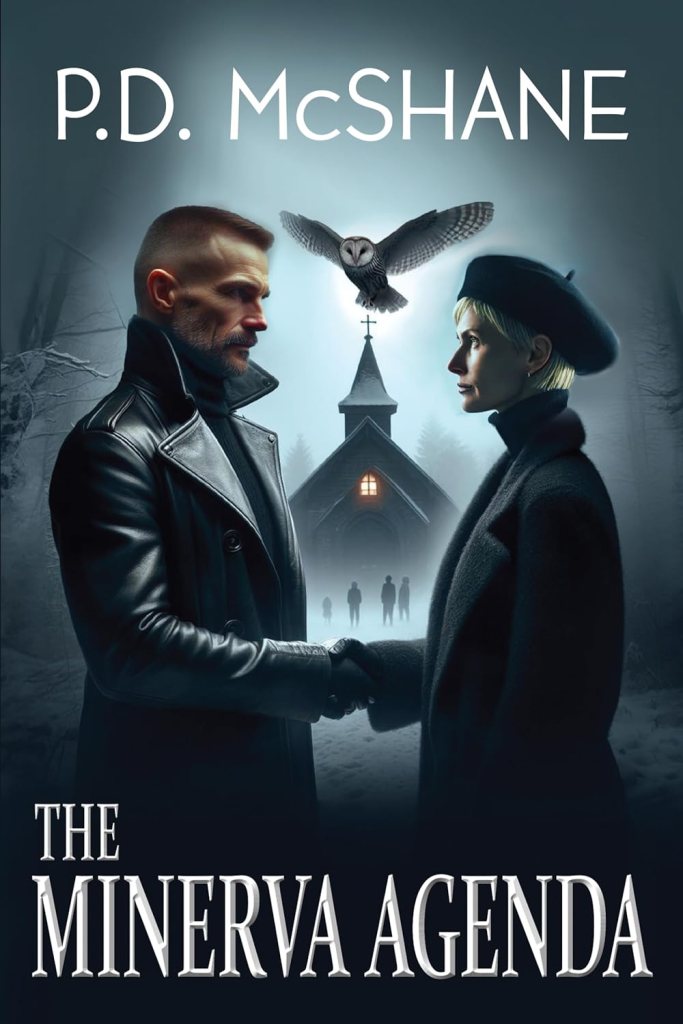
A timeless deadly conspiracy, a faceless enemy—can they stop Minerva before democracy falls?
CIA veteran Tony Mancini and ambitious MI6 officer Caroline Sinclair navigate a deadly clandestine world, tracking Minerva— a shadowy force manipulating global events through fear and terror. What Mancini first dismisses as Sinclair’s wild theory soon spirals into a terrifying chain of events, claiming lives and threatening the very fabric of democracy.
With each step forward, Mancini and Sinclair find the stakes escalating to terrifying new heights, drawing them ever closer to the ominous and faceless force known as Minerva. Nothing in Mancini’s years of combat in the deserts and jungles of the world could prepare him for what he needs to confront this threat.
A tour de force of tension and intrigue—where conspiracy, murder, and politics collide. Don’t just read it—dive into The Minerva Agenda and uncover the truth!
What does ‘Minerva’ mean and why did you choose that word?
Minerva is the Roman Goddess of war. Subtle and intelligent, she has a long-term strategic perspective. Mars, the Roman God of War, is much more about the battle, in your face, smash ’em up, whereas Minera thinks about plans within plans, the bigger picture, and things like ‘justice’ from a deep sense of belief – real power versus raw power.
She’s been around, influencing things, for a long time. Today in the former Roman city of Bath in England, Minerva and her pet owl are everywhere. Institutions of learning and law use Minerva or the owl in their symbolism and artifacts to display knowledge, wisdom, perspicacity and erudition.
There could be no better name for an organisation that has existed for hundreds of years, wielding ‘real’ power through intelligence, influence and powerful subtle relationships than Minerva.
What inspired you to write about spies and the military?
I hugely respect people in the military and intelligence sectors. The vast majority of them show a connection to a greater purpose and contribution. When I’ve spoken with them, the conversation is not often about personal gain and ego, rather they speak of protection, aid, national security and values. They express a strong underlying motivation that links to service and decency. And they don’t do this from five-star hotels, often they’re in some of the ugliest parts of the planet with a strong likelihood they may never come home.
These people live a life unlike anything we know. Their personal sacrifice often goes unnoticed, including long periods of time away from home in war zones. People in the Intelligence sector are never ‘off’. They always have to think about who they are and how they behave. Often friends and even closest family have no idea what they do. While exciting and exhilarating, it must be exhausting to be constantly on alert.
It’s always grated on me how after their twenty-five years of service (or however long their tenure), they can be cast off. ‘Thanks for your service – now off you go and reinvent yourself.’ It seems callous that these people who have sacrificed a lot, and risked so much are let go, just like that. This is exacerbated because many of them suffer mental and physical damage.
Where did your interest in the military stem from?
My father drove tanks in WWII. In later years, he suffered from it mentally. He didn’t talk about exciting stuff, but of long periods of boredom punctuated with horror and terror.
The book describes a conspiracy. How plausible do you think it is in real life?
American social critic and commentator George Carlin said, ‘The real power in this country is big business, they choose, they own you. They’ve long since bought all the corporations, the land, the senate, the congress, they’ve got the judges in their back pockets and they control all the media companies, so they control all the news and media you get to hear. Politicians are put there to make you think you have freedom of choice – but you have none – you’re owned.’
It’s hard to argue with George when you look around. This is Minerva’s playground! Think about the WHO, WEF, big pharma, global media and big tech companies; they have massive power, and they’re not elected and not accountable to anyone. Huge power structures do influence the world.
How did you keep the conspiracy straight in your head? Did you use any particular tools or writing aids?
The book grew organically, I began with a general idea but that changed as the book developed and the characters took on lives of their own. It was easy enough to keep track of the conspiracy but keeping it relevant as current events played out was a work in progress. Bring in biowarfare and AI.
While all of these world events and conspiracies – which are starting to look a little bit too real – were taking place, I really enjoyed writing the characters, relationships, events and plots. That was much more fun than the conspiracies themselves.
One of the things that struck me in The Minerva Agenda how much I came to care about the characters. How did you develop Mancini and his trusted colleagues?
I didn’t want the characters to be heroes, I wanted them to be human with weaknesses and doubts, so readers would think, ‘I know someone like that.’
Mancini has demons but still holds to a set of principles. He’s in his fifties, a realist and pragmatist, with hard life lessons that never really leave him. He’s also a decent human being. Sure he’s no saint, he gets things wrong, but he gets things right too.
He has a small team of associates and I like to think I’ve developed their characters enough to make them more than simple sidekicks. From reader reactions, I think I’ve succeeded.
I like all my characters, even the bad ones. I hope when the reader gets to the ‘baddies’ and learns how they think, they just might wonder if there’s a small something in what they’re about? Probably not!
What can you tell me about Sinclair?
I loved working with her character. She has a betrayal story and needs courage to back herself after that. I don’t want to give too much away, suffice to say she was a work in progress right through the creation of the story. I feel I got her right.
Mancini and his cohort visit many locations. What drove that?
I’ve been fortunate to have visited all the places in the book and have met many amazing humans. I wanted to show that the world is a fabulous place full of wonderful locations and people – sure there’s some bad people out there, but there’s a hell of a lot more decent people. If the book makes you want to get out from in front of a screen and go and experience some of these places – do it!
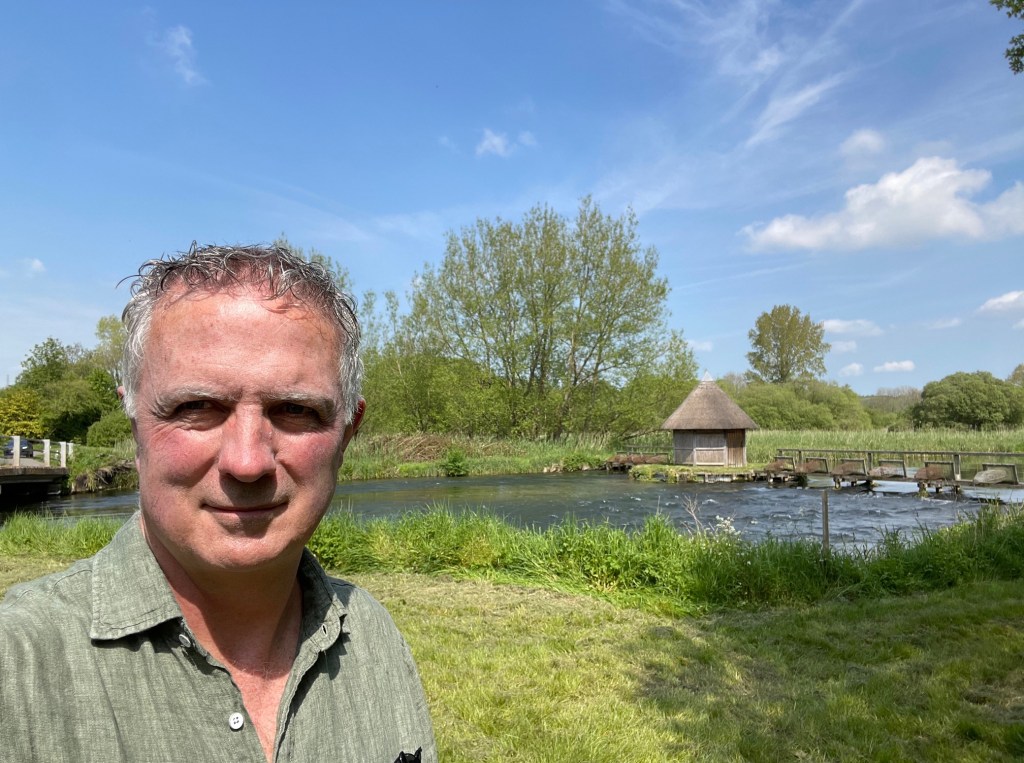
What final thoughts would you like to leave with us?
The book is about people, relationships, fear and power. The plot is a vehicle to challenge our thinking about how things are in the world today. I hope it makes people think and have good conversations – AND gets people wanting a sequel.
You can follow Pat on:
Email: PDMcShaneauthor@gmail.com
Website: PDMcShaneauthor.com
Facebook: P.D.McShane Author
Insta: PDMcShaneauthor
Booksales link: Amazon Australia
Next time: an interview with Bella Ellwood-Clayton on The Swimming Group, her latest fun twisty psychological thriller.
 Brightside Story Studio
2 thoughts on “P.D. McShane on Spies, Conspiracies and The Minerva Agenda”