
Interview by Sophia Voukelatos.
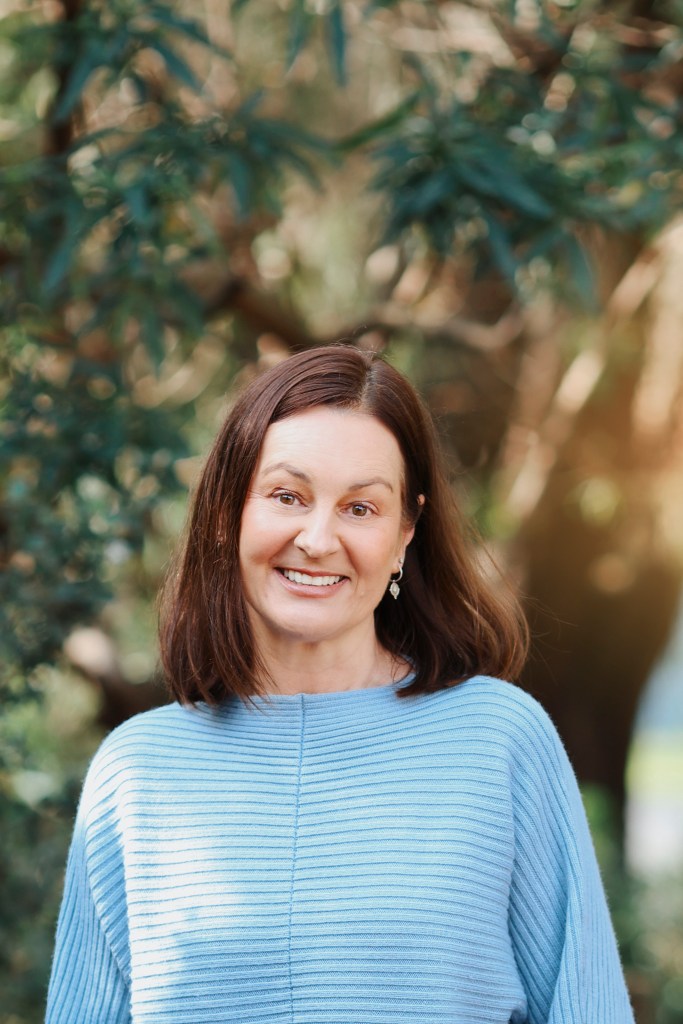
Read along to a riveting conversation with Melbourne-based author and editor, Kirsten Alexander, on her upcoming third novel, After the Fall. We discuss her professional career, her experience of motherhood, her love of travel and the importance of showcasing female stories.
How has your experience working as an editor and copywriter influenced your writing?
Working as an editor especially has been a joy. I previously worked in-house, then freelance, before stopping for a while. Now I’m back to freelance editing through the Faber Academy, Kill Your Darlings, and other freelance avenues.
It’s great working as an editor and collaborating with authors to look at how they tackle certain problems and how to deal with issues, such as plot, pacing and structure. I learn as much from the authors I’m working with as I hope I can contribute.
Copywriting should’ve made me clearer and more concise, but it hasn’t really. However, it’s not always immediately obvious how an experience influences one’s work. Copyrighting has definitely taught me how to work to a deadline and work to a brief.
How has being a mother shaped you as an author?
In ways both good and bad. I have two sons; the youngest is twenty-two. They have taught me things as they are both really creative in different ways from me.
When they were younger, I had to put other people’s need first and park my own goals, but writing is blessedly one of those things you can pick up later in life and continue to do throughout your life. It doesn’t have to be a young person’s game.
Do you think being a mother also shapes the themes you explore in your writing?
I hope it has lent me a greater level of empathy and compassion. I do look at the world slightly differently, sometimes through the eyes of my two sons. However, it is also important that I stay true to myself and that I share my voice as a middle-aged woman.
Can you please share the blurb for After the Fall?
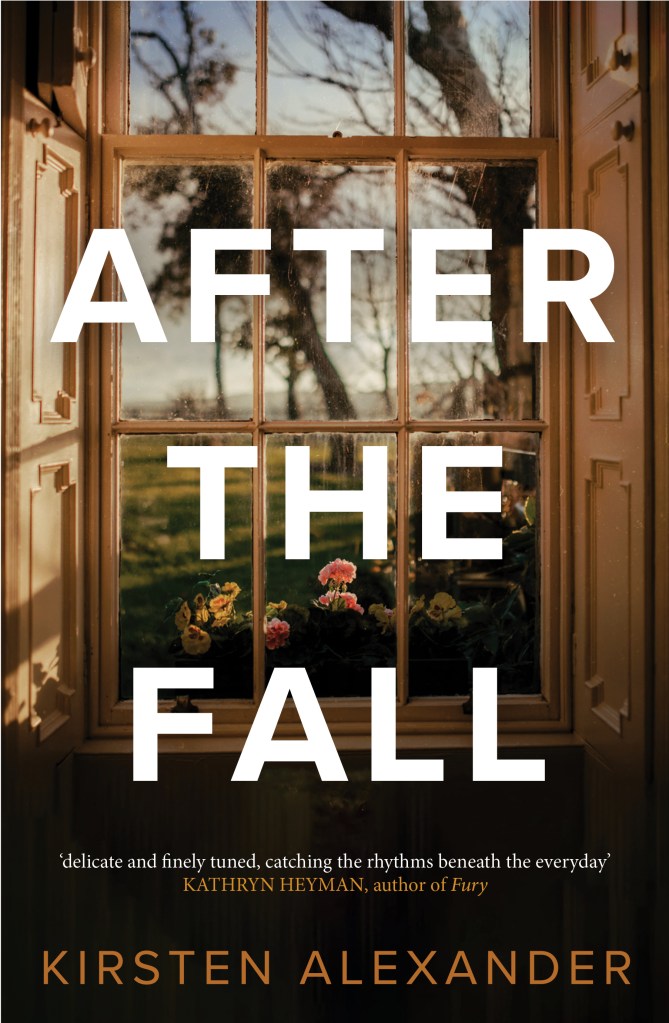
Fleeing Melbourne for a village in the Yorkshire Dales had felt right. Sanctuary, I’d thought.
But nowhere is as straightforward as it first appears.
When Giselle escapes to the north Yorkshire village of Hollydale, she doesn’t give much thought to what she might find there. She’s more concerned with what she’s leaving behind – a toxic marriage, the loss of her beloved sister, Lina, and the cloud of suspicion over the circumstances of Lina’s death.
But in this small community she makes new and fascinating friends, chief among them Margaret, a wealthy elderly local who lives in Chatswood Hall, the mansion perched on a hill above the village, and Tom, the local handyman. Giselle hopes to start life over, but the past cannot be outrun and her husband will not be cut loose, threatening to arrive in Hollydale at any moment.
When a bomb explodes on the one road that leads to her cottage, Giselle realises that her Hollydale life is larger and more complicated than she’d understood.
A story about intergenerational friendship between women, coercive relationships and power, and the endless possibilities new connections can bring.
Setting plays an important role in your works. Why did you choose to set this narrative in a village in the Yorkshire Dales?
I’ve been to Yorkshire, and it’s really beautiful. The village in the novel isn’t real, it’s entirely made up.
I chose Yorkshire as I needed to get this character as far, physically, as possible from her life in Melbourne. I also needed a place that was isolating but had a deep history. When I’m visiting places like the United Kingdom, I feel the solidity of these long histories.
After the Fall follows a woman’s journey as she moves to a new town. How did your personal experience of moving throughout your life, from San Francisco, to Brisbane, to Melbourne, influence this?
I love travel. It’s instructive on many levels. It allows you to understand yourself differently, and maybe it even allows you to be the most authentic version of yourself. To leave home and drop yourself in an unfamiliar environment, lets you to look at the world with fresh eyes, drop your prejudices and drop your complacencies. Travel is always a positive thing. I know it’s a luxury and isn’t available to everyone, but it broadens your heart and mind to what it means to be human.
Any examples of how travel has shaped your writing?
I don’t think it shaped my writing as I was already open-minded to the idea of what it means to be human. While not being religious myself, one of my favourite travel experiences has been going to Istanbul and observing the call to prayer, which takes place five times a day. Seeing how people gather around a common cause is really special.
After the Fall explores female connections and womanhood. Open Field, the digital journal which you founded, also prides itself on ‘telling stories for women, by women’. Can you share the importance of this mission for you?
It’s complicated and it’s different for everyone. Gender is super complicated. When I grew up, being a woman was definitely being a second-class citizen. Women were paid less, were dumped with all domestic chores, were told their role was to marry, have kids and never follow their dreams. Everyone I knew from an early age was aware that this was wrong and sad. All three of my books are about women’s role in society, as it is something that has occupied my mind my entire life.
Your first two books were set in a historical context, is this book the same?
After the Fall is set in the present time. While the book I am currently writing is set far into the past. I choose to set my novels in certain time periods for no particular reason; I’m just following things that pique my interest.
How would you describe the genre of After the Fall?
I have no idea. I’m definitely not snobby by ideas about genre or categories. I almost think that’s for other people to figure it. Once you launch a book, it’s out of your hands.
Did the process for writing and publishing After the Fall differ from your first two books?
Working with a ‘Big Five’ publisher, Penguin Random House, versus an independent publisher, Ultimo Press, were very different, but equally great, experiences.
Because Ultimo Press is small, it all felt very personal and open. There was a lot of one-on-one attention. At Ultimo, they displayed a strong sense of purpose and a lot of energy, but obviously they have a lot less money than Penguin Random House. To be frank, Penguin Random House, I love them, but they spent money on bookmarks, videos, et cetera, and I don’t know whether any of those things changed sales.
In regard to the editing, it was a similar editing process in both publishing houses. I saw the manuscript a similar number of times with the editor and the proofreader, and I had similar deadlines. At both publishing houses, the process was explained to me upfront, and the quality of staff was great.
What is your favourite stage of the writing/editing process?
Absolutely the editing. I don’t love the blank page. I like having something to work with, where it feels like a problem-solving exercise. I don’t show my work to anyone before it goes to the agent. Maybe because of a lack of confidence. The agent gives a little feedback, but it is largely whether they are able to pitch the title or not. I absolutely love hearing what the editors thinks and doing rewrites.
Where do you draw inspiration from at the initial stages of your manuscript development?
I think it comes out of nowhere. I don’t fully understand how creativity works or where ideas come from. Ideas can just land in your subconscious.
In this case, I came across an article about the Greenham Common Women’s Peace Camp. The Peace Camp was huge and lasted for decades. At one of their demonstrations, there were 50,000 women circling a military camp, telling them to get out. I saw a reference to this peace camp that started my ideas for the book. While the book is not about the Greenham Women’s Peace Camp, one of the character’s past includes a background serving with the Peace Camp.
I’m fascinated by the questions: How we decide what matters and who matters? Who holds power? Who shapes the world?
What next?
I’ve started on something else, and it has my heart racing. It is historical, set in the Middle Ages, a little bit about religion and very much centred on women’s experiences. Since I know nothing about religion, I am doing a lot of research, and my friend’s sister, a retired theologian, is educating me. She was involved in the movement for the ordination of women. She’s amazing. I am loving learning from her.
You can follow Kirsten on:
Facebook: Kirsten Alexander
Insta: @kirstenalex511
Website: www.kirstenalexander.com
Booksales link: Amazon Australia
Next time: The Winding Narrative Turns Seven
 Brightside Story Studio
4 thoughts on “Kirsten Alexander on After the Fall”