
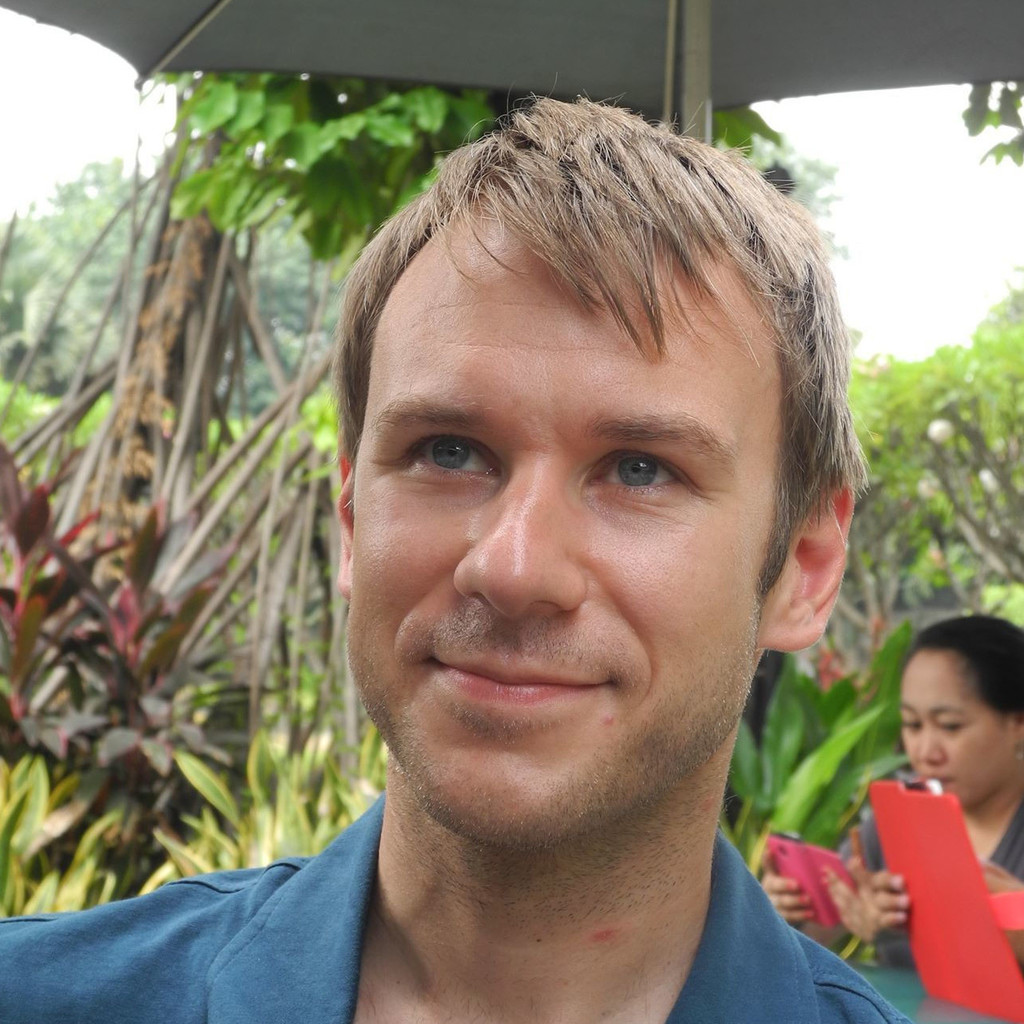
Timo has worked for years on the frontline of machine learning, so he’s uniquely qualified to write about the IT world. His thriller, The Scaevola Conspiracy, follows a couple of new graduates who join one of the biggest IT companies on the planet. Join me with Timo as we discuss the dangers of AI, and question how realistic his book scenario is in real life.
Can you please give us a brief summary of your career?
I studied machine learning in 2010 when it was not as big a thing as it is now. My thesis was on catching money launderers with AI, and I collaborated with banks and the German version of the FBI. Instead of letting humans define static rules to define what money laundering is, I trained an AI model to learn these behaviours by itself. That’s how I fell in love with the practical applications of machine learning.
I then began a start-up that used machine learning to predict stock prices and trade accordingly. Obviously, this didn’t work, or I’d be sitting on my own board by now, but I learnt a ton. For example, I thought I had a money printing machine – the system was evaluated in backtests and real-time tests by economic institutes and famous professors – but I still couldn’t sell it. You need salespeople, you can’t just say, ‘I’m a boy genius out of college.’
After the start-up collapsed, I joined Google. I worked in Ads at first, which was boring. Then in 2017, Google acquired Kaggle, and I joined the team and really enjoyed working in that data science community. For five years, I had a blast.
I’m now working with Google’s CoreML division to provide internal machine learning infrastructure to teams like Bard (Google’s version of ChatGPT). It’s all super-secretive, there’s a lot happening. If there’s a centre of machine learning right now, that’s where I am.
What drew you to writing?
With all that going on, my son was born in 2018. I took paternity leave, which forced me to stop all the other stuff for four months. People said you need to keep your brain going, and I thought this was a cool opportunity to do something for myself, out of my comfort zone. I like reading thrillers like Lee Child and John Grisham, so I was like, could I write one myself? First, it was just a question. I read a bunch of books about writing, and one resonated – the one about the snowflake method. I like structure, and this gave me clear instructions, so a month down the line of the prep work, it wasn’t a question anymore, it was ‘I’m doing this’.
Can you please share the blurb for The Scaevola Conspiracy?
Get ready for a high-octane thriller that will keep you on the edge of your seat! Luke, an intellectually brilliant but socially awkward data scientist, lands a dream job at a prestigious Silicon Valley tech company. Teaming up with the sharp-tongued ex-hacker Ada and Clark, scion of a famous venture capitalist, their journey takes them into the heart of California’s tech hub where artificial intelligence is about to change the world. But their lives take an unexpected turn when a string of mysterious deaths rocks the tech scene.
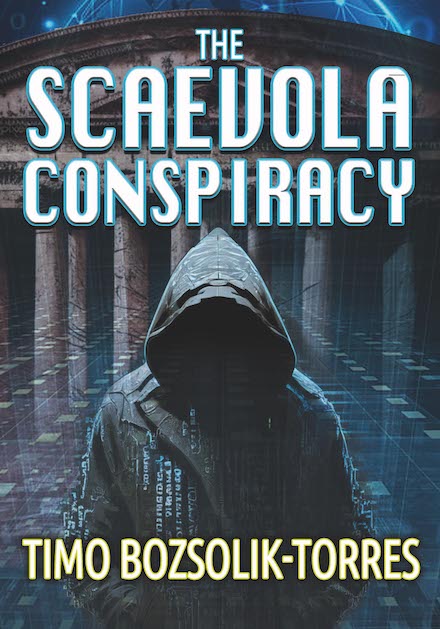
Driven by the desire to make things right, they launch an investigation and discover a far-reaching conspiracy lurking beneath the glimmering surface of the Valley. As they venture into forbidden territory, survive adrenaline-fueled break-ins, and become hunted by the authorities, they expose a terrible truth.
But time is running out! Can they prevent the upcoming apocalypse?
THE SCAEVOLA CONSPIRACY is a pulse-pounding tech thriller that delves deep into the underbelly of Silicon Valley, combining gripping suspense with cutting-edge technology. Luke’s electrifying adventure will leave you breathless, reminding us that sometimes the greatest heroes are those who dare to challenge the boundaries between the virtual and the real.
How long did it take?
I completely underestimated the project. Four months didn’t pan out. I had my first draft after about a year, then it took another six months for five or six rounds of editing myself, then I dared send it out to agents. This took another six months, then I found Michael at New Authors Collective. We spent another six months editing, and it took a good year before I found a publisher. Overall, it’s approaching five years to publication.
How did you find the time to write?
It started being problematic from the beginning because our baby was a terrible sleeper. The maximum he would sleep in a row was 15 minutes. There are three months of which I remember very little. I strapped him to my chest and walked around the apartment for entire nights. I have a fitness watch, and I clocked 20 kms in our apartment most nights. At some point, I thought this was a waste of time, so I took out my phone and started writing. When I read it again the next day, I often thought it was 90 percent shit. But that still meant I had 10 percent good stuff, and I could rewrite the rest. That’s how I approached it.
When I returned to work, I had 30 minutes on the ferry there and back when there was nothing to do except admire the nice view of Sydney. So, I wrote on the ferry. I held myself accountable for 100-200 words a day. Sometimes, I’d throw the whole thing away. Of course, there were also times when I had an hour or two and sat down very purposefully, but I did a lot on the sidelines. I don’t know if that led to the whole editing part being longer.
How much truth is behind the fiction? With AI currently fuelling such angst, is it possible we are really heading towards extinction?
I approached my story by taking what’s possible today and imagining it in the hands of a resourceful and evil person. The premise of my story is possible now, the technology all exists. Everything you do online leaves a footprint and creates a profile. Google, Meta, Amazon, these tech companies know who you are in and out – your hobbies, interests etc. Then there’s Neuralink, which is working on a direct brain connection. It’s crude now but give it five years and we’re probably approaching the stuff I’m writing about in my book.
The big question is how you can use this for something terrible. The missing bit in reality is the evil villain who wants to kill off humanity. All these Silicon Valley billionaires, even the ones portrayed as evil, are good people in their hearts. They are big philanthropists. Still, they have resources, money and incredible power through their companies. If they misuse that, we’re really in trouble. I wondered what would happen if one of those turned bad.
But I don’t think we’re heading to extinction any time soon.
What next? Will you write another book?
That’s a difficult question. Not right now, I want to see how the first book goes. What gets me out of bed is creating something that delivers value to people, so if people like my writing and, it sparks some thoughts, and the book sells well, then I’d see it as ‘why not?’
Either way, it’s a busy world, so it won’t be tomorrow. I’ll let it sit for a year or two and then if I’m in the right space and see interest, I might do it. If nothing else, when I’m older and retire, then I’ll probably come back to it. So, nothing concrete, but it’s possible. I like my characters, so if I write more, it would probably be with the same people.
You’ve also used your experience in the literary world to create another app. Can you explain a bit about Quantifiction?
Everyone who’s published a book knows that finding a publisher is hard. As a first-time author, I realised the chance of getting picked up is so small because of how inefficient the market is. Take examples like Harry Potter being tossed in the bin fifty times, or Stephen King being glossed over. So I asked, what if I can use my machine learning knowledge to figure out what makes a good book? I’m in both the literary and AI worlds, so it’s close to my heart to see if I can combine them. Humans aren’t great at assessing submissions because they’re so subjective and how long it takes them to read them. My app can read a whole book and predict its sales potential in a few seconds.
I’m sure this will spark all sorts of ethical questions and emotional responses. Maybe we can do another interview about this topic?
That would be great. (And here it is: Timo Bozsolik-Torres on Improving Manuscripts using AI)
You can follow Timo on:
Email: timo.boz@gmail.com
Website: https://www.scaevola-conspiracy.com/
Blog: https://quantiwriter.blogspot.com
LinkedIn: http://www.linkedin.com/in/timobozsolik
Facebook: https://www.facebook.com/timo.bozsolik
Twitter: https://twitter.com/TimoBozsolik
Booksales link: https://amzn.to/3OL47ye
Next time: an interview with Sarah Bourne on writing about social issues
Next interview with Timo: Timo Bozsolik-Torres on Improving Manuscripts using AI
 Brightside Story Studio
Certainly sounds like an interesting read. The app will be worth a look too!
LikeLiked by 2 people
It reminds me of The Circle by Dave Eggers. Really gripping.
LikeLike
I’ve just downloaded it to Kindle.
LikeLike