
 Mariam was born into expat life and has since lived in ten countries and four continents. She married a man of German/Italian heritage, and they have three multicultural and multilingual kids. An economist by training and an expert on expat life through experience, she penned This Messy Mobile Life to help fellow expats. Has this eternal expat ever thought of settling down? Read on to find out.
Can you please share the blurb for This Messy Mobile Life?
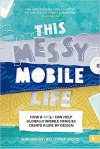 Do your family dinners happen in more than one language? Do you celebrate Christmas and Eid? Do you and your family feel at home in more than one country? If so, then you may be a MOLA Family and yes, this multicultural, multilingual, mobile life can get a little ‘messy’.
In South America, a mola is a shirt made from intricately stitched layers of patterns and cloth. Worn with pride, it represents who you are – inside and out. Mariam Ottimofiore presents a mola as the perfect metaphor for globally mobile families living between cultures, countries, languages, nationalities, identities and homes, who find their story hard to articulate. She has created the MOLA tool to help global families design and show their stories to the world. This is your ‘life by design.’
Raw, honest, inspiring and uplifting, This Messy Mobile Life comprises personal reflection, expert advice and survey research to help you take your global family from mess to mola.
It’s now four years since This Messy Mobile Life was published. How has the book been received?
It’s had an enthusiastic reception, and I am grateful I received so much support from my global tribe – online and in-person. I was lucky my book came out before the pandemic, a year before lockdown. It was written for an international audience, so I had to be out there and did in-person book launches in many countries such as Ghana, South Africa, the United Arab Emirates, Thailand, Germany, Pakistan, the United States and the Netherlands. Only one got cancelled in Singapore and we turned it into a virtual launch instead.
It helps that the book features well-respected experts on culture, language and mobility – nine big names, who contributed and helped promote the book. They also helped to set up the events or provide logistical support on the ground.
What was your first introduction to expat life?
At the time of my birth in 1982, my Pakistani parents were living in Bahrain. They went back to Pakistan for my birth, which I have always been very grateful for, so I can proudly say I was born in Karachi, Pakistan. When I was just a few weeks old, we returned to Bahrain to continue our expat life. We later moved to the United States, but after a few years there, my parents were done with living abroad and we repatriated to Pakistan. Because I spent my most formative adolescent years especially my teenage years in Pakistan, it’s a big part of my identity. But from the ages of 18 to 40, I’ve lived abroad, so I’ve now spent most of my life outside of my passport country of Pakistan. I’m also an Italian citizen through my cross-cultural marriage, although I’ve never lived in Italy, but that’s a whole other story!
With all your moving around, what’s the longest you’ve stayed in one place?
Aside from Pakistan, where I lived for over a decade, four years is our personal best, which we achieved in both Copenhagen and Dubai.
What has driven your overseas moves?
I’ve moved around for every reason possible. Initially for my father’s career; then my own studies and career, which took me back to the US and to the UK; my cross-cultural marriage which meant I moved to Germany for love; and currently my husband’s career which has dictated our past five international moves – to Denmark, Singapore, the UAE, Ghana and now Portugal.
My husband works in international shipping, so each location is a city with a big port. The only way up the ladder in a dynamic corporate environment is to move. If you love a place, you can stay, but there’s no job security either way, so it’s a question of what you want to do, and the more you limit your options, the less likely you are to get what you want. We’ve always said we’re a globally mobile family, but now we’re re-evaluating whether we want to continue down this path. It’s good we’re both on the same page, which gives a solid basis for deciding what or where could be next.
Are you seriously considering settling down?
Settling down never sounded like something I wanted to do, but I’m on my tenth country, Portugal, and as the kids get older, I may need a break from moving because constantly going through transition, culture shock and learning another new language can take a toll on you in many ways. I need to consider what our family needs at this moment. It’s a reckoning.
If you settled down, where would you live?
In a cross-cultural marriage, there’s no easy answer because where is home? Germany? Italy? Pakistan? Our three children were born in different countries – Singapore, Dubai and Lisbon – so home is different for each of us. Whose country do we settle in? We’ve found we work best on neutral land, so one person doesn’t have the clear advantage. Abroad has become our comfort ground. This is a reality for many people.
We’re happy here in Portugal. We’ve been living here for almost three years, although the first year didn’t count because we were in lockdown. On top of that, I went into pre-term labour at 26 weeks just four days after we moved here. Even leaving Ghana was like something out of a James Bond movie because of Covid restrictions and closed international borders, we were evacuated on a charter flight by the Italian embassy in Accra. As beautiful as Ghana was and as heartbreaking as it was to suddenly have to leave, they had to get me out because of my high-risk pregnancy. I needed advanced medical facilities and as it turned out Level 4 NICU care for our premature baby who was born at 30 weeks. We made it to Portugal just in time. In expat life, timing is everything. I’d like to stay in Portugal a bit longer.
Amidst all these moves, you’ve maintained an impressive career. Can you give us a brief summary?
Thank you for saying that, although I must admit I have struggled with maintaining my career while living this life on the move. After graduating in economics and political science, I pursued a corporate career for just under a decade in investment banking and oil trading. But when you’re the accompanying spouse, there comes a moment when you have to redefine yourself. This isn’t necessarily a bad thing, but an exciting opportunity. This happened when I arrived in Singapore in 2012, five months pregnant with my first baby and unemployed. Initially, it was hard as I watched my husband go to his new office to start his new job, while I looked out of our hotel window and forced myself to go down for breakfast. I was uncomfortable not having a job or anywhere to go, but I asked myself what I really wanted to do next and realized I wanted to write, so I switched to full-time writing. That was a defining moment for me and an intentional career switch away from the corporate hustle culture.
Until then, I’d only done business writing; I’d co-written a book with my economics professor on South Asian economies Export Success and Industrial Linkages in South Asia (Palgrave Macmillan 2009), but I wanted to write about things I was interested in like travel. I became a content writer and editor for a lifestyle magazine in Singapore.
When we moved to Dubai in 2014, I set up my own blog And Then We Moved To and wrote about the issues that were important to me, such as moving, migration, peeling back the layers of our global identities and exploring a sense of belonging/home as an expat. I was invited to write for magazines and connected with other expats through an organization called Families in Global Transition (FIGT), and through various conferences and speaking opportunities. I knew I wanted to write a book on this topic, but I didn’t get started until the day I received a cold call from a reporter at the Wall Street Journal. Ironically, in all my years in the corporate world, the WSJ never contacted me, but now I was an expat writer, they called me for a quote about expat life and moving abroad with a family. I answered the reporter’s questions, but when I was asked if I’d written a book on the topic, I had to say no. As expected, my quote never made it into the WSJ article, but that was the kick I needed to realise I had no time to waste. Nobody would take me seriously until I’d proved myself as an authority on the topic. I started working on This Messy Mobile Life shortly thereafter.
What’s your next project?
I’m working on a second book, a novel about expat life with characters from all around the world, who move to Portugal to start a new life but can’t seem to leave behind the secrets from their past. It’s the eternal question of: can moving abroad give you the courage to embrace your journey, claim your story and become your own anchor in life?
The jump from writing non-fiction to fiction has taken a lot of learning. I now have a manuscript that’s gone through a structural edit, several rounds of revision and I’m finding beta readers for the summer.
What are the big differences you’ve found between writing fiction and nonfiction?
I was confident in nonfiction because I knew the subject matter. Besides my own experience, I surveyed over 100 expats. The structured writing process suited my academic background and my research skills, so I felt this was my natural forte.
The hardest part in writing fiction is to find the confidence to create a structure. My novel is a multi-POV story of three women, so it’s quite a process to make it easy to follow.
Also, my characters are diverse, all from countries I’ve lived in, so the question arises whether you can write about those countries if you’re not from there, but you’ve lived there. It’s so important to have beta readers from those places to check for authenticity and inaccuracies. I didn’t need to go to that extent in nonfiction.
On the upside, fiction gives you so much freedom. It requires a different mindset, as it doesn’t have to be factually what happened, it’s about telling a compelling story, which I particularly enjoy. I’ll also need to develop new strategies in terms of promoting and marketing.
Do you have any tips for authors?
Trust the process and believe in yourself. People think hard work and determination is the key, but to get there, you really need to believe in yourself as a writer. If you don’t believe in yourself, no one will. You must stand proudly behind your books.
It’s also important to be vulnerable and not put up a façade. I wrote about the messiness of expat life as well as the amazing bits and the complicated bits, and that kind of honesty resonated. Don’t be afraid to put yourself out there.
You can contact Mariam at:
Website: www.andthenwemovedto.com
Facebook: https://www.facebook.com/andthenwemovedto/
Instagram: https://www.instagram.com/andthenwemovedto/
LinkedIn: https://www.linkedin.com/in/mariamottimofiore/
Twitter: https://twitter.com/mariamnavaido
Email: mariamottimofiore@gmail.com
Book Link: https://www.amazon.com/This-Messy-Mobile…/dp/1999304012/
Next time: an interview with author Megan Norris on using her book to help survivors of family violence
 Brightside Story Studio
2 thoughts on “Mariam Ottimofiore on being an eternal expat”