
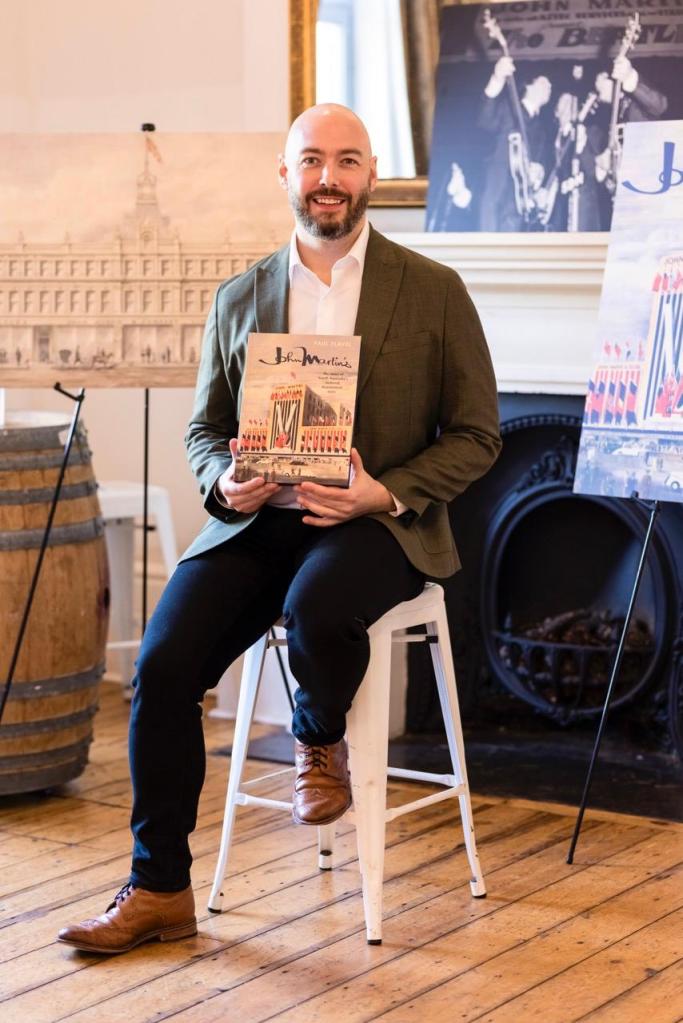
Paul has always loved the South Australian department store, John Martin’s. When he realized memories of the beloved store were fading, he resolved to write a book to celebrate the company’s legacy. John Martin’s – The Story of South Australia’s Beloved Department Store is the result. It almost sold out in its launch week, so a second print run is arriving before Christmas, and less than two weeks later, it’s already onto the third run. Why is it generating such a buzz? Read on to find out.
Can you please share the blurb for John Martin’s – The Story of South Australia’s Beloved Department Store?
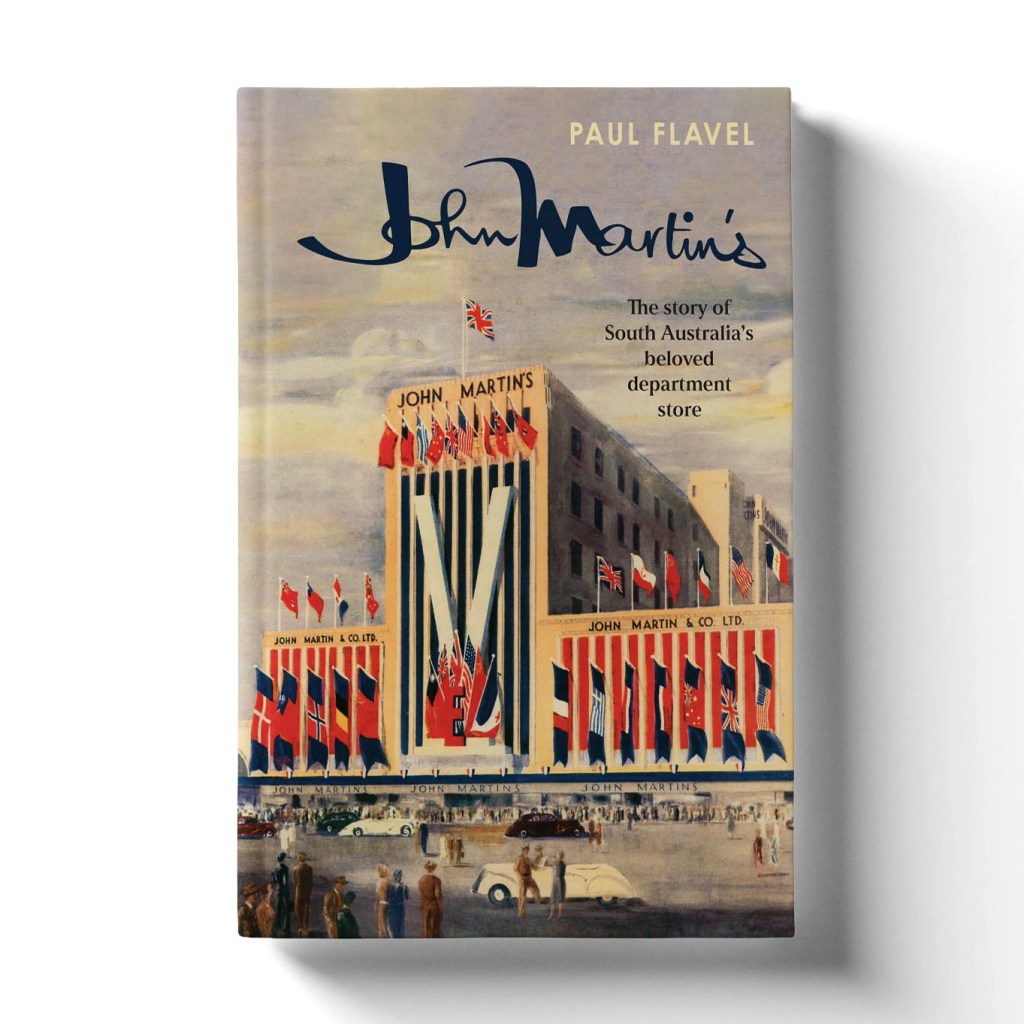
The doors to John Martin’s are open once more thanks to the stories from former staff and customers, rarely seen photographs and Paul Flavel’s impeccable research that fill the pages of this book. It tells, for the very first time, the history of a beloved and iconic department store.
Opened in 1866, John Martin’s flourished for over 130 years, until the unthinkable happened and the store in Rundle Mall, Adelaide, closed in 1998. The passing of the years has not dulled South Australians’ love for ‘Johnnies’. Thousands of people worked there and even more loyally shopped there. John Martin’s was the company that brought The Beatles to Adelaide, and the store that delighted generations of children with its Christmas Cave and pageant.
Run by the illustrious Hayward family for most of its existence, John Martin’s gave everything it had to the people of South Australia. As you read Paul Flavel’s comprehensive and endearing John Martin’s, memories of riding in the lifts, dining in The Buttery, or getting ready on pageant day will take you back to a bygone era of retail in Adelaide.
What inspired you to write this story? Do you have a special connection to John Martin’s?
I grew up in Adelaide in a family that shopped in Rundle Mall. I knew all the department stores and could see they each had their own distinct personality. Even as a little boy, I could tell John Martin’s was special. I loved the old lifts and in the 1990s, my mum arranged for me to ride with the lift ladies. It was this sort of personal touch that made the store stand out.
Jump forward to 2019, I was visiting my grandma and John Martin’s came up as it always did when in Adelaide. It had become my habit to document our conversations as she was the last of ten children and her passing would signal the end of an era for the family. It dawned on me that we weren’t doing for John Martin’s what I was doing for my grandma – recording its past.
It was bewildering to me that the store we continue to love so much has never been remembered in this way. The thought hit me so strongly that I started immediately. I couldn’t let the memories disappear with the people who worked there. In hindsight, I was so lucky to have written about this when I did because of the age of the players involved. Many wouldn’t have been able to contribute in the way they that they have. I have sadly lost many people along the way, but I am glad their families have this book to remember them by.
What is your professional background, and how did it equip you for this project?
I have no formal literary training, although my role in HR involves a lot of writing. I always had a passion for English at school and have been an avid reader throughout my life. I felt at ease writing and had a vision for how to do the research and tell the story.
I wanted to lay out the facts as best I could and color it with emotion. I knew some bits needed more sentimentality, and other aspects needed to focus on specific details. My experience in HR came in handy for this balancing act between fact and emotion.
HR also involves a lot of interviewing and discussions, which helped me greatly during the research phase. Despite this, I struggled to call as many people as I did, something about my generation avoiding talking on the phone!
You mentioned research. How did you go about this aspect of the project? There must have been some challenges when the company had closed decades earlier.
Much as the store was loved, it was difficult to find information about it. When I googled it, I found very little. I put ads in the paper to ask who wanted to tell their stories about working or shopping there. Once I began, it exploded in a web of connections. All sorts of people contacted me.
For the more archival aspects, I went to the City of Adelaide archives, State Records Office and the State Library of South Australia. Until recently, access to this information has been limited, which added to the mystery of what happened. Folklore had built around the limited access to the State Library archive. I was very pleased to get approval to access the archives from the parent company, David Jones, who retains ownership of John Martin’s.
For the first 18 months of the project, I dug through the archives and collected recordings, interviews, anecdotes and memorabilia. Research continued until late in the process as I developed the manuscript. I added things up to a month before the book went to printers. I could have gone on forever as so many people worked at John Martin’s or knew someone who had, but you have to reach a point where you feel you have covered enough. I was also aware of the advancing age of my audience and was keen for them to see the finished book before it was too late.
What did the rest of the process look like?
In year two, the actual writing was underway. Once I started fleshing out whole chapters, I reached out to an editor – that’s you. First thing we did was lay out the chapters. Because it’s historical, it has a natural start and end. I could then slot interviews into that timeline, which is how the book grew. By then, I’d exhausted the factual research and I could overlay these human stories in a beautiful marriage of reference material and human elements. The framework we’d put together made it easier.
There were months I didn’t do anything because I needed a break. I went away and came back to it with more energy and fresh eyes. I finished the first draft in September 2023. At that stage, I hadn’t read the entire manuscript, so I went away for the weekend to read it all through.
How did it strike you reading it that first time?
I’d forgotten how many anecdotes people had given me. I liked how I’d anchored events in time and used stories and anecdotes to bring them to life. Even one line from a person here or there added flavour. I hoped that would help readers connect to the heart of the story.
Once you had a complete manuscript, what happened next?
I engaged Bernadette Foley of Broadcast Books for the next stage: turning the Word document into an actual book. We needed to consider so many details from what paper to use, the graphic design, final edits, and which printer to use. There were so many processes going on at the same time, and Bernadette kept it all together. She referred me to Nada Backovic for the graphic design.
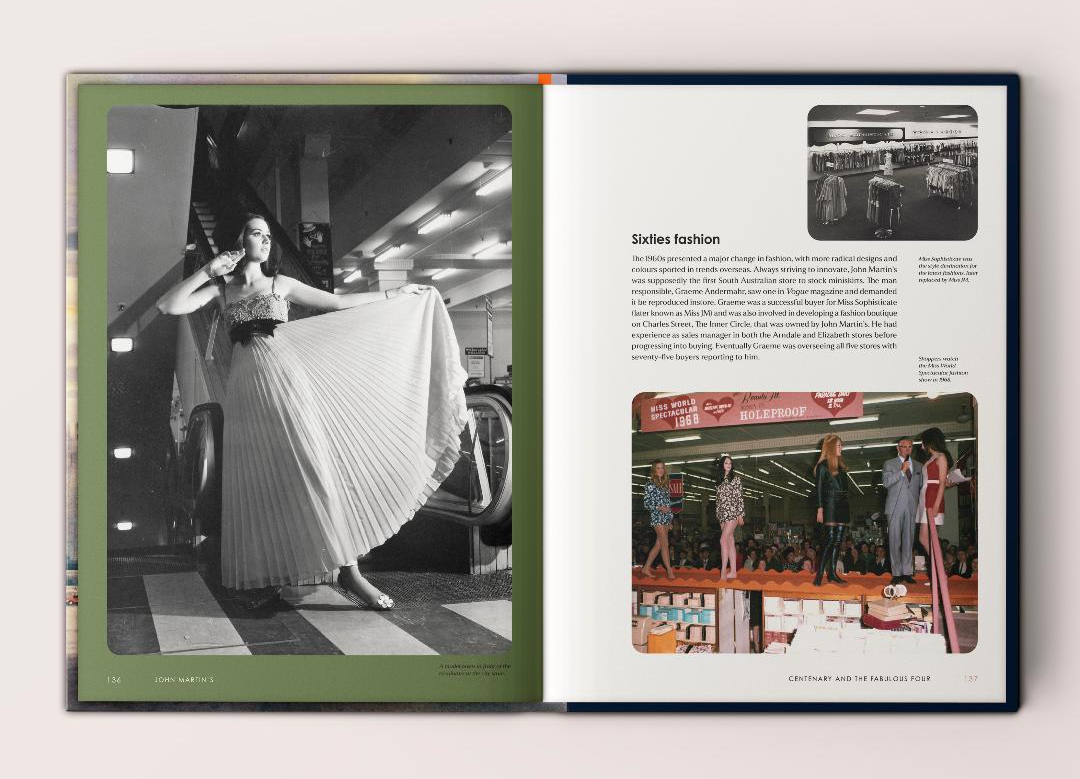
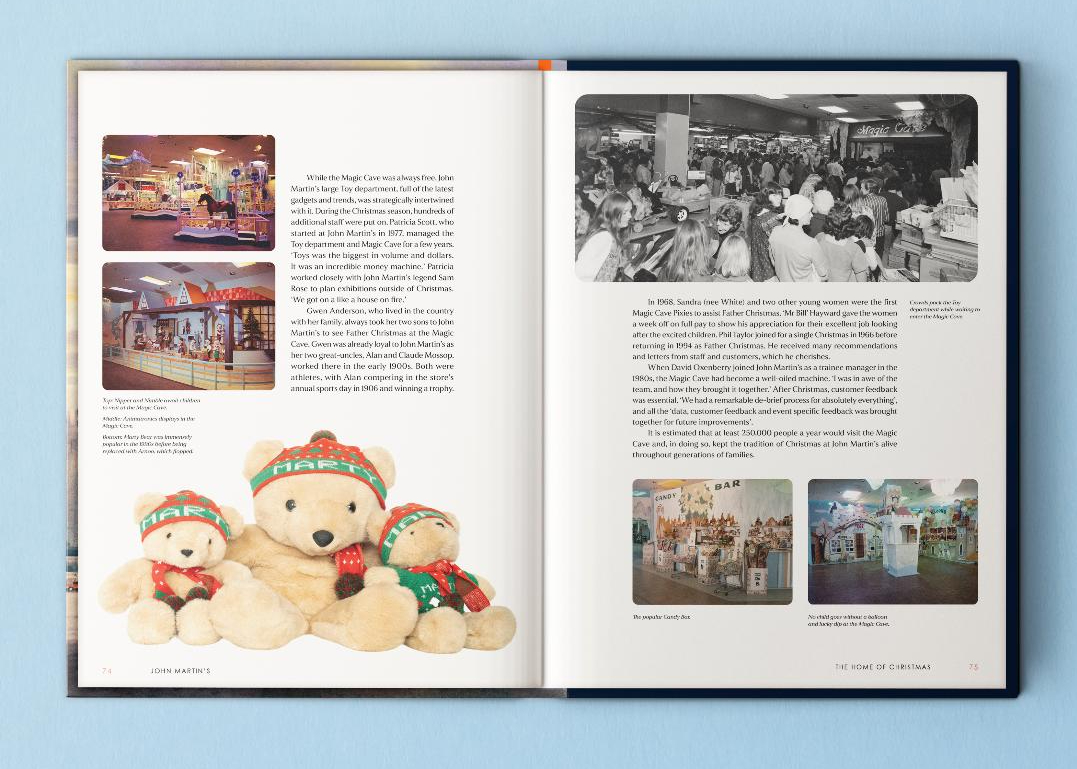
I deliberately chose editors and other professionals who weren’t from South Australia, as I wanted people who weren’t familiar with the source material and could treat the subject matter independently and without sentimentality. I could add emotion to the writing, I didn’t need more of that from the others.
How did you find the experience of writing this book?
At times it was difficult to navigate emotion, fact and legality. The people who’d worked there toward the end are still very upset about what went down, so it was hard to bear witness to that. Still, interviewing people was my favorite part. It was a privilege to be invited into their lives and into their homes. That’s the richness the book brings beyond the photos.
John Martin’s closed 26 years ago, yet the reception to this book has been outstanding. How do you feel about all the hype?
I’m still processing it. The launch event was a bit like a wedding with a blend of friends and family alongside people I’ve interviewed and some I’d never met, all coming together to recognize the importance of John Martin’s and the book.
My friends from Melbourne totally underestimated how emotional the South Australians were about John Martin’s, and didn’t expect media interest to be so strong. It’s rare for a business to create such a buzz, particularly after all this time.
Why do you think John Martin’s has such a strong connection to the South Australian community?
Everyone loved John Martin’s because the company worked so hard to be part of the community from the day they opened in 1866. Its growth was about the State, for the State – such a unique way of doing business. They never had plans to nationalize, they just wanted the South Australian community to do well. They were loyal to the people and the people were loyal back. This was before businesses had mission statements or stated their culture and values, John Martin’s didn’t write these beliefs down as such – it just got on with it. In all my interviews, I couldn’t find anyone with bad things to say about the Company.
The Christmas Pageant in particular had a huge impact. People travelled from far away in the country so they could participate. The pageant still runs today, funded by National Pharmacies. South Australians are so nostalgic. John Martin’s comes up in the media every year because of this long association with Christmas.
The number of people who thanked me for doing this made me so happy. I am lucky to have been able to fund this and present this story with the heart these people deserve.
You really have invested your heart and soul into this project: time, emotion, intellect, and money. People may not realize that you self-published this book, or how much you invested in it. Do you mind sharing a bit about this?
From the beginning, to do the story justice, I wanted this to be a hardcover, full-colour, professional book. There was no mucking around. Many people have no idea the costs involved in a project like this. For example, there is a cost associated with copyright permissions for photographs. To reach the first print run of 1000 copies, I paid for: photos from media, library photos, author photos, conversion costs for paying the printers in USD, flying back and forth to SA, editing, copyediting, and graphic design. Also, there have been a lot of costs in setting up the online store from where I sell the book, alongside retail orders from bookstores.
Fortunately, sales are doing well, and I can reinvest what I make in the next print runs. Hopefully, it will become self-sustaining. I think I’ll continue to find readers. The third print run should take me through 2025, and we’ll see after that.
So where to from here?
It’s like I’ve become the custodian of John Martin’s. I am protective of its memory and its history. The book has triggered a lot of spinoffs, so my focus will be on those.
A documentary is in the works with ABCx, a small production company in Adelaide. I’m not directly involved, but I want to help them tell the story in a way I couldn’t. They filmed the book launch and my library talk. I’m connecting them with the right people before it’s too late.
I’ll also do a series of talks, and there was so much interest in a talk I did at the State Library, that we want to continue working together and hope to hold an exhibit next year.
Best of luck with it all. Thank you so much for chatting with me.
You can follow Paul on:
Email: info@johnmartinsbook.com
Website: www.johnmartinsbook.com
Facebook: Remembering Johnnies
Insta: Remembering Johnnies
Next time: I share some adventures on The Ningaloo Coast.
 Brightside Story Studio
3 thoughts on “Paul Flavel on Capturing Memories of John Martin’s”