
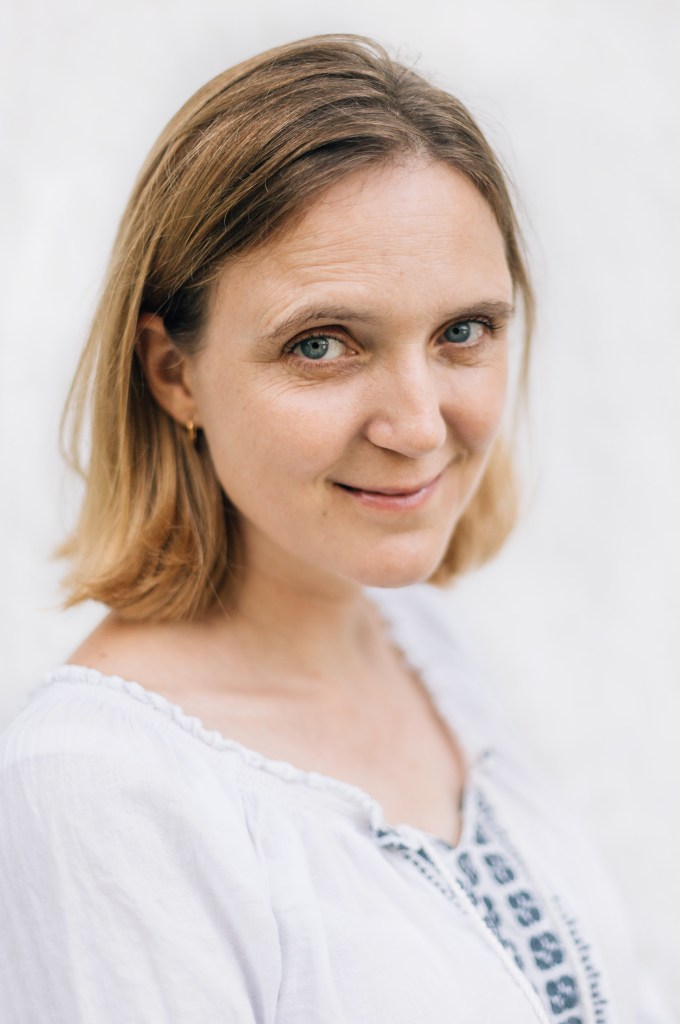
Karien has lived a nomadic life (see our previous interview on Expat Life, Writing and Migrant Domestic Workers). Despite that – or maybe because of it – she is intrigued by houses. This is apparent in the titles of her standalone novels: her debut The Yellow House, and her recently released The Black and White House. Join us as we chat about how location influences her writing and more.
How did the houses in The Black and White House and The Yellow House influence the stories?
There’s a difference between the two: The black and white house is a haunted colonial villa where one of the protagonists lives, but the yellow house is the dream of a main character – she wants to build it in her hometown in Indonesia. Both are real places. We used to live in the black and white house featured in this book. It had an illustrious history that inspired the story. The yellow house was the house my previous helper built in Indonesia, paid for by her Singaporean wages. In my book, the character hasn’t built her yellow house yet.
Can you please share the blurb for The Black and White House?
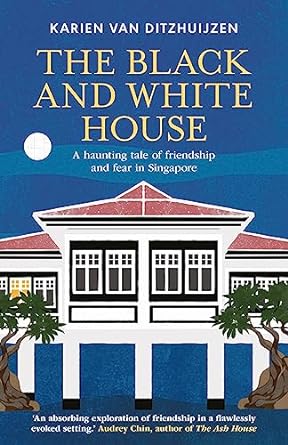
Anna is thrilled to move into a black and white house in Adam Park, confident she will thrive in Singapore, find a job, make local friends. But echoes of footsteps in the hallways make her wonder whether rumours of the house being haunted are true. Overwhelmed and lonely in a new country, Anna slowly unravels.
When Salimah, single mother to a wayward teenager, loses her job, she revisits Adam Park where her childhood was uprooted. A place with a dark history. Anna bumps into Salimah, and their lives intertwine in unexpected ways. Tensions rise as the house’s haunting presence grips both women and threatens to upset an already fragile friendship.
Can you tell us a little about Anna and Salimah?
Anna has an emotional connection to Asia as her grandmother was born in the Dutch East Indies in what is now Indonesia. Despite her conflicting emotions and colonial guilt, Anna longs to feel at home in Singapore and hopes to achieve this by building relationships with local people. In Singapore, it’s easy to stay in the expat bubble; some people find it hard to connect with others from culturally different places.
Salimah, as a Muslim Malay, is part of a minority in Singapore, which has presented its own challenges in her life. Anna and Salimah develop a fragile friendship until they get pitted against each other over the adoption of a baby.
This part of the story was inspired by a true story of a Dutch girl called Maria Hertogh. During WWII in Java, her family gave her to a Malay woman, presumably to keep her safe from internment by the Japanese, though the exact circumstances remain unclear. After the war, the Malay woman took the girl back to Malaysia, and her Dutch parents only managed to locate her in 1950, when she was fourteen. She had become a Muslim, spoke only Malay, and didn’t want to leave her foster mother. The custody case went to court in Singapore and became the source of one the biggest race riots there. The Malay were affronted as they felt one of them was taken away to be given to her Christian birth parents.
The story fascinates me because at its core, to me, it is not only about cultural and religious differences but about what it means to belong somewhere. Culture goes much deeper than skin colour. It made me curious about how this story would have played out if it were set in modern times.
The Black and White House also sounds like a ghost story. How does this play out?
It is a ghost story indeed! There are physical manifestations of ghosts in the house. In some ways, the ghosts are a symbolic representation of the past coming back to haunt Anna and Salimah. If you don’t deal with the past, you can’t move on. The challenge for the characters is whether they can learn to live with their ghosts.
How do the themes in the books overlap or differ?
The Black and White House examines issues related to colonialism and how that impacts a modern expat emotionally. Are you allowed to feel at home wherever you want to feel at home? That’s the central question. It’s a complicated one with white people historically doing bad things in Asia. It’s also about guilt. For me, as a white European living in modern Asia, the book raised more questions about colonialism than it answered.
The Yellow House is about migrant domestic workers, and how the modern world still sees richer countries exploiting those less fortunate. There’s also an element of this in my second book, when Anna mistakes Salimah for a cleaner and offers her a job. Salimah is in fact highly educated, but she accepts the job because she was recently unemployed and is curious to solve a mystery from her own childhood related to the house.
Both books have an overlying theme about migration and how it affects people. They also explore relationships between women of different cultures: their friendships and what comes between them. The men have secondary roles.
How does the theme of migration play out in The Black and White House?
Many of us have experienced the loneliness of moving to a new place and the disruption of having no friends, not knowing which supermarket to go to, where to get your hair done. It takes time to find your feet. The emotions Anna experiences are universal, no matter where you are moving from or to.
Salimah is Malay Singaporean. She feels at home in Singapore although her ancestors came from Indonesia and the majority in Singapore are ethnically Chinese. Anna moves here from London completely new, although she does have a family history in the region. She is regarded as foreign, while she feels a connection to the country, as I do. I spent a large part of my childhood and adult life in Asia and it has definitely become part of my identity. My Singaporean friends call me Kampong Karien. Kampong is the Malay word for village, so they mean I act just like the Malay in the old days – keeping chickens, planting local vegetables, eating mostly Asian food, and loving durian.
Why do you enjoy writing about Singapore?
Singapore has a rich history that goes back centuries, but most of the people who live here now are migrants. It’s melting pot of cultures. This gives a special vibe to the city and makes it an interesting place to explore in terms of identity and history.
In the past, the British brought over people to work here from countries like India, China and Indonesia. Today, people from those places still come here to work and make money, but it’s organized differently. Before, you could stay and settle here. Now, visas are temporary. If my husband loses his job, I have a few weeks to leave the country.
Will this book appeal to people who aren’t familiar with Singapore?
Ultimately, The Black and White House is a story about two women and a baby. It delves into universal themes of human emotions and relationships as well as the deeper themes about colonialism.
You’ve also published a middle grade book, JungleGirlMia. It, too, references the setting in the title. Can you tell us a bit about that?
JungleGirlMia is focused on how we live together with nature and how not to ruin nature. Despite Singapore being a city state, it has so much nature. It’s the greenest city I’ve ever been in, and the biodiversity is amazing. My children’s books are set in another house we lived in here that bordered a nature reserve, whose inhabitants would regularly spill over our fence into the garden.
What next?
I’m working on a sequel to my children’s book. I have ideas for other adult books, one set in Bali, where I lived for a year, another on a remote Indonesian island where people are still living in a very traditional way, but I haven’t started yet, they are just rough ideas.
You can follow Karien on:
Website: http://www.bedu-mama.com
Facebook: https://www.facebook.com/karien.vanditzhuijzen
Insta: @karienvd
Booksales link: Amazon AU Black and White House
Next time: Christmas Book List 2023 showcases the books of the authors I’ve interviewed this year.
Next interview: the fabulous Bella Ellwood-Clayton on Weekend Friends
 Brightside Story Studio
Insightful interview. The premise for both novels sounds fascinating.
LikeLiked by 1 person
Yes, and Karien writes beautifully, too.
LikeLike