
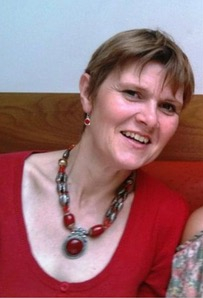
Sarah is a counsellor, yoga teacher and prolific writer. In the past couple of years, she’s published five novels. The common thread is their focus on specific social issues, such as dealing with grief and trauma. With a career in mental health, her writing is peppered with insight into the human condition. Join us as we discuss the genesis of each of her stories.
Congratulations on your collection of novels. Let’s dive right in with When Lives Collide. What issues does it address?
The story starts with a car accident in which a character’s child dies. It examines her response to grief. The other main character is in an abusive relationship.
What drove you to write about family violence?
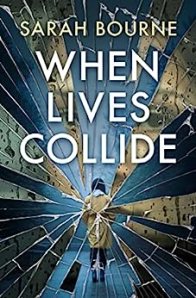
I see so many people in my counselling service who are dealing with abuse at home: physical, financial, emotional and sexual. Walking down the street, a proportion of the people you see will be dealing with violence at home, it’s so pervasive. It makes me feel angry, sad and powerless.
Does writing about it help?
As a writer, I believe I have a responsibility to raise these topics and get them into the public domain. We need to make people more aware. One of my friends gave a copy of this book to a friend of hers who was in an abusive relationship, and it motivated her to leave.
What a great example of how novels can help readers make a difference to their lives.
It made it feel worthwhile.
Where did the idea for The Train come from?
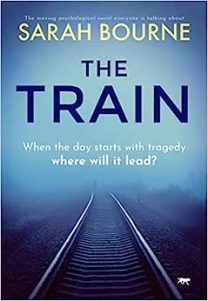
My mother had been diagnosed with dementia, so I knew I’d soon be facing loss. This got me thinking about how a cast of diverse characters might respond to the same event.
Through work, I’d seen people consider or commit suicide, so I used that as the trigger event in the story. How would a bunch of strangers react when someone jumps in front of their train? The ‘death of a stranger’ trope.
In some ways The Train is an outlier for me because it’s told from so many points of view. When I first wrote it, the chapter about the person who committed suicide wasn’t in it, but my agent insisted it needed to be there for reader satisfaction. Really, the story was about these people who hadn’t known her, and what confronting mortality in such a brutal way caused them to consider in their own lives. Grief sharpens your focus.
Ella’s War is set during and immediately after World War II. What made you opt for an historical setting?
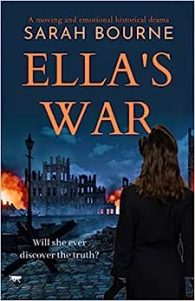
I was actually going to try to write a comedy. The original idea was that a wealthy socialite wakes up with no memory, and all these men try to claim to be her husband. To make the plot work, it had to be in the time before mobile phones and the internet, so I set it in and just after WW2. Then I had to build her character. While researching the early 1940s, I discovered that WW2 was the first time nurses worked at the Front, so I decided she was a nurse, and the amnesia was partly a trauma response to all she’d seen and done. Out went the comedy!
To give some relief to the heavy goings on elsewhere, I added a love interest in the post-war story, when she re-establishes her life in the village and tries to reclaim her past.
InVisible tackles terrorism. What made you go down that path?
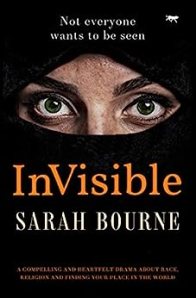
This was an example of an idea coming from the strangest of places. I was listening to the radio and heard a phenomenologist discussing the philosophical effects of solitary confinement. Her thesis was that people go mad because we need people around us to co-create and validate our experience, and when you don’t have that, reality begins to break down.
I found that fascinating, so I read about solitary confinement from people who’d experienced it or worked with others who’d experienced it. I wanted a female protagonist, but why would a young woman be placed in solitary confinement? It had to be terrorism. That’s the only way they could be detained without charges. What I find so fascinating about writing is that an idea can come from anywhere, and this interview gelled things I’d been thinking about and brought it into focus.
Lucky last is Exile. What inspired this story?
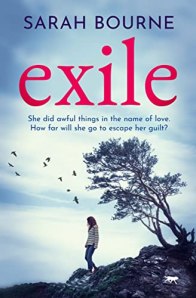
When I was younger, my mother had a friend who had erotomania. I was in early college, studying occupational therapy, including psychology, so I found this woman intriguing. In her 50s, she’d never been in a relationship and was obsessed with a colleague, convinced he was going to leave his wife for her. She sat outside his house at night and looked at the order the lights went out and believed he was sending her a message.
I researched erotomania and also obsessive love disorder and went into a chatroom where I introduced myself and asked questions, explaining that I wanted my readers to understand this condition, and the pain, despair and euphoria experienced by the people who have it.
I wrote about a woman who had ruined lives through her obsessive loves. She went from one relationship to another wreaking havoc on their lives and her own, so she exiled herself to somewhere she could live as a hermit. But of course, that didn’t go according to plan.
The book also examines the protagonist’s relationship with her distant, unemotional mother and her attempts to find some resolution and heal herself.
How do you take these kernels of ideas and develop them into complete novels?
Once I have an idea, I come up with the characters who are going to enact the story. I think deeply about what drives them. This part can take a while, and I do a lot of walking and thinking and note-taking.
When I’ve decided, I write a character profile for each main character. I have a proforma which has about one hundred questions from physical descriptions to favourite food, likes, dislikes, dreams, ambitions and fears, so I know them inside out, and nothing they do will surprise me or if they do, I can recognise it and pull it back.
Setting comes next.
I’m not a plotter. Often I’ll start writing and change it all around, but I try to have a first and last scene before I begin. A strong opening and a satisfying ending. That’s what I’m working towards from page one. The rest is up to the characters.
What next? What issues are you grappling with?
As I’m now in my 60s, I’m grappling with age, so that’s what I’m addressing. I don’t have a title yet, I’m just calling it Three Women. It’s about neighbours in various phases of life, who become unlikely friends.
The first woman is in her early 70s. The book begins when she has a fall and needs a hip replacement. She has to face issues of aging and mortality.
A woman in her 50s, who is on the autism spectrum, has been passed over for a promotion she’s been working towards for a long time. It’s given to a 32-year-old incompetent man. She’s grappling with middle-age invisibility and a crisis of confidence.
A woman in her 30s splits up with her partner and moves out of London to have a quieter life. She’s dealing with questions about belonging, whether she wants another relationship and concerns about her body clock.
I hope readers can relate to one or more of these stages of life and the challenges they bring.
It sounds fabulous, Sarah. I look forward to reading it when it comes out.
You can follow Sarah on:
Email: sarah.dragon2006@gmail.com
Website: sarahbourne@wordpress.com
Facebook: Sarah Bourne author
Insta: Sarahbourne007
Twitter: @sarahbourne007
Booksales links:
https://mybook.to/WhenLivesCollide
https://mybook.to/TheTrainSB
https://mybook.to/EllasWarSB
https://mybook.to/InVisibleSB
https://mybook.to/exileSB
Next time: How to convert from Australian English to US English
Next interview: Karien Van Ditzhuijzen, the Nomad who Loves Houses, talks about her latest novel, The Black and White House.
 Brightside Story Studio
3 thoughts on “Sarah Bourne on writing about social issues”